Author: hyper_user

  • Performance Marketing and the Art of the Upsell

    Performance Marketing and the Art of the Upsell

    Too often marketers get caught up in the idea of attracting new customers and simply forget to maximize the revenue generated from existing and previous customers.  There are many ways such maximization can be realized, including through repeat sales and asking for referrals.  Another way performance marketers can consistently grow revenue without having to increase the amount of money spent on recruiting new clients, which is by far the most costly part of any company’s marketing campaign, is to and make sure that they maximize the revenue from each client by implementing strong upsell strategies.  Here we will take a look at three upsell strategies which tend to generate generous returns.

    Start with something free – One of the most common ways marketers get potential clients interested in their products is to first give them a free sample.  With information based products, usually the free sample is a certain portion of the information, a portion which is given to the customer for free in the form of a video, auto responder series, free report, or any of myriad other forms.  Once the client finds the information to be relevant and useful, they are far more likely to spend more to purchase a complete version the information than they would have spent otherwise.  The same concept works for products as well. First, the client is given a small sample, generating substantial interest.  Then, once they see the value of the product, they are more likely to make a substantial purchase.  The free trial concept is actually an upsell technique because the customer will pay more for a product once they trust that it is exactly what they want or need.

    Capitalized on impulse buys – Retailers have known for years that people will likely make additional purchases when in the process of completing a purchase that they have already decided to make.  This is the concept behind the candy and trinkets which adorn the checkout aisles of supermarkets everywhere. Savvy performance marketers take advantage of the same principle and offer their clients the opportunity to make additional purchases when they are in the process of paying for a purchase that they have already decided on.  Additional purchases should generally be lower in value than the original purchase, in order to take be presented as an impulse and avoid generating a lengthy decision making process in the customer.

    Make use of special offers – Presenting customers with special offers and bundles of products is another great way to upsell while in the process of making the original sale.  Customers may be more likely to spend more money if they feel like they are getting a greater value.  Special offers can be anything from a discount on additional items to a discount for the prepayment of a certain quaintly of products or services.  Bundles of products or services can be used to not only increase revenue per transaction, but if the bundles are properly designed they can also lead to greater overall customer satisfaction with the purchase.


  • How Brands Benefit From Performance Marketing

    How Brands Benefit From Performance Marketing

    Performance marketing is a marketing arrangement in which the marketer is paid only after a specific, predetermined action has been taken by the end user. Performance marketing can be implemented to promote a broad range of products and services over a broad range of digital channels such as mobile, social, and search engine optimization or SEO. There is an added benefit for brands with this kind of marketing that isn’t available in other forms and that is that the risk is spread out between the publishers that promote the brand and the brand itself. This allows brands to fund performance marketing campaigns from the sales that are generated rather than from their dedicated marketing budgets.

    In performance marketing the amount of risk is dependent upon the nature of the campaign. In a cost-per-thousand impressions campaign, or CPM campaign, the brand is typically saddled with most or all of the risk. In a cost-per-download campaign, the risk is shared by both the publisher and the brand. Cost-per-acquisition or CPA campaigns the risk is laid entirely on the publisher. But regardless of the campaign, performance marketing dictates that the publisher make certain that all advertising is aimed at the right audience. Because of the shared risk involved in performance marketing campaigns, brands have the luxury of being able to use several different channels and types of campaigns.

    This kind of flexibility ensures the easy use of performance mechanisms across a variety of channels which means a more diverse audience. Success, however, is largely dependent upon the campaign, whether or not it is targeted properly, and whether it is engaging to the prospective customers or not. This is the reason that brands are becoming increasingly aware of the need to make their campaigns available across a wide range of formats including mobile, mobile search, apps, and of course email.

    For more information from Marketing Week, click here.

  • Four Ways to Kill a Campaign Before It Starts

    Four Ways to Kill a Campaign Before It Starts

    For those who employ marketing strategies over the Internet, the term ‘campaign’ is generally used to denote a particular advertising implementation which utilizes specific components.  The benefit of working with campaigns is that they can be deployed, analyzed, modified, and redeployed.  The concept of working with campaigns is quite simple, but in practice developing a profitable campaign is often the result of long, painstaking work.  Because of this, performance marketers should give themselves and their campaigns every opportunity to succeed, and avoid the following campaign killing mistakes.

    Unclear goals – Before you begin a campaign you should clearly determine its goals, the results you intend to achieve, and what criteria will need to be met in order to determine whether or not the campaign was a success.  Often times people begin a campaign solely hoping to make a profit.  While this is certainly overall goal of performance marketing in general, it is not necessary that every campaign to be implemented with profit as its specific goal.  Campaigns may be used to test consumer sentiment, test a particular landing page, gain insight into the algorithms of a particular website, or test any of countless other metrics.  So before you design and launch campaign, be sure to clearly define exactly what you hope to accomplish with it.

    Throwing it out there – One of the most common beginner mistakes when developing their first campaign is giving in to the notion that they should simply put something out into the marketplace, that this alone is better than doing nothing.  But this is not usually the case.  The deployment of a campaign costs money in the form of advertising payments, be they pay per click, pay per call, or other pay per action charges.  Hence, it is best to think through even your initial campaigns in order to best design them in such a way as to make them most likely to succeed.

    Lack of research – When designing a campaign it is usually not enough to simply consult your previous knowledge for guidance on how to move forward.  The Technological Age has led to a rapid increase in the rate of change occurring among the population, which gives rise to continuously growing and changing sets of demographics and data points.  One of the best ways to kill your campaign before getting started is to neglect to research your targeted customer and what makes him or her tick.  On the other hand, thoroughly investigate your prospective customer if you want to increase your chances of success.

    Listening to popular wisdom – So often, in the performance marketing community self-described experts offer page upon page of free advice online, and are often willing to defend their ideas vigorously against anyone who questions their reasoning.  However it is not a good idea to take such declarations to be the infallible true.  This is not to say that the advice is worthless.  But it is to say that what does not work for one person may very well work for you after you apply your unique creativity and problem solving skills to the matter.  Is usually a good idea to consider all free advice in light of that fact, and instead of allowing others to determine for you that which is possible and impossible, make the determination for yourself by testing and verifying.

  • Four Personality Traits Essential for Performance Marketing Success

    Four Personality Traits Essential for Performance Marketing Success

    Many experts recommend that the first step in the process of selecting a profession should be to take an inventory of yourself and determine what are good at and what you like to do.  When it comes to entering the field of performance marketing, such advice could prove invaluable.  Performance marketing is not for everyone, and those who excel at it generally have certain qualities which allow them to recognize and maximize opportunities.  Here we will take a look at some of the traits which make a person best suited to become a successful performance marketer.

    Attention to detail – One of the most important factors in performance marketing is the feedback given by a campaign.  This feedback can come in various forms such as click through rate, sales, average sales amount, and average time spent on a particular page of a website.  Those who are naturally detail oriented will find it far easier to manage all of the aspects of a performance marketing campaign, and analyze the countless data points which a performance marketing campaign inevitably generates.

    Persistence – It is extremely rare for a performance marketer to have success on their first, second, or even third campaigns.  Becoming skilled at performance marketing can best be analogized as a running a marathon, rather than a sprint.  In order to learn the ins and outs of performance marketing, and overcome the numerous setbacks, the personality trait of persistence is absolutely necessary.

    Capitalization – Performance marketing costs money.  It cost money to run a campaign.  Many campaigns, especially for beginners, will lose money as you learn what works and what doesn’t work. So, you must have adequate capitalization if you are to have the best chance at success.  Additionally, trying to test a campaign on the cheap, due to a lack of funds, is likely to produce inconclusive results, and hence a loss of those limited funds.  This is not to say that only the rich can be successful performance marketers.  But only those who have adequate reserves of cash and credit will be able to really to explore all of the possibilities of any given campaign.

    Positive attitude – Another important aspect of a successful performance marketer is their tendency to believe that there is an answer to every problem and that they have the resources, intelligence, and patience to find it.  This positivity is especially important in light of the fact that many marketing venues, such as Facebook and Google, continuously change and update their algorithms and guidelines.  Whereas the negative person is more likely to become discouraged under such circumstances and quit, the positive marketer will exhaust every ounce of his or her creativity in searching for a solution.

    Performance marketing has been attempted by hundreds of thousands of people, and like most other business opportunities, only a small percentage become truly successful.  But these rates of success and failure say less about performance marketing opportunities than they say about the people who attempt to take advantage of the opportunities.  The fact is that a positive, persistent, well capitalized, individual, an individual who naturally pays attention to detail, is very likely to have the success they desire in this exciting field.

  • Pay per Call Leader HyperTarget Would Like to Meet You at Response Expo 2014

    Pay per Call Leader HyperTarget Would Like to Meet You at Response Expo 2014

    Anyone who has ever undertaken the challenge of improving the results he or she gets from their marketing efforts has undoubtedly come across expert advice recommending that they attend seminars.  For those interested in a developing proficiency in the marketing field, seminars not only provide intensive training and the latest and most cutting edge techniques and technologies,  but seminars and expos also tend to be gathering places for like minded individuals.  For those interested in maximizing the results of their performance marketing efforts, Response Expo is one of the absolute best gathering places where individuals can come together to learn and share.

    Response Expo is an annual event produced by the Direct Response Marketing Alliance (DRMA) and Response Magazine.  The event regularly attracts some of the biggest players in the marketing world, particularly those who make it their life’s work to decipher the infinitely complex code to success in performance marketing.  Due to Response Expo’s prestige and ability to deliver a top quality experience, HyperTarget Marketing proudly announces that will be in attendance for the 2014 Response Expo, which runs from April 29 – May 1 at the Hilton San Diego Bayfront.

    This year’s expo promises to build on the success seen at the 2013 event.  The show will feature a kickoff party, several must-see keynote addresses, and even a golf tournament. HyperTarget will be in attendance in order to continue to promote the pioneering work the company is doing in the burgeoning niche of pay per call marketing.  This relatively new form of lead generation and sales prospecting is seeing higher demand by the day as sales professionals across the country continue to learn about the benefits pay per call marketing can bring to their businesses.

    Do you plan to go to Response Expo?  If so, HyperTarget representatives would love to meet with you in person and discuss all things performance marketing.  Please reach out to us at 213-973-9905 and introduce yourself.

  • How Long Should My Online Content Be?

    How Long Should My Online Content Be?

    Over the past half-decade the Internet has all but converted the average person into an amateur writer.  Whereas prior to the popular adoption of such Internet based activities as blogging and tweeting, the average person probably did most of his or her online communication in the form of writing emails, now Internet based communication is rivaling all other communication forms in terms of scope and importance.  This crossover has given the performance marketer unparalleled opportunities as it relates to reaching and communicating with potential clients. But, recent research indicates that consumers of online content like to have their Tweets, headlines, and blogs served to them in very specific portions.

    Longer Blogs are Better

    When it comes to blog posting several studies have indicated that longer blog posts are actually preferred to shorter blog posts. In particular, readers tend to prefer blog posts which are in the range of 1600 words for blogs which do not feature many graphics, and 1000 words for blogs which are image laden.  The key, according to researchers, isn’t so much the number of words as it is the number of minutes the average reader takes to reach a blog post.  It turns out that 7 minutes reading time is the sweet spot for blogs.  So while many performance marketers make their bread and butter off shorter blog posts, it is worth investigating how longer blog posts may affect the end result.

    Ideal Length of a Tweet – Under 100 Characters

    One of the most important things to remember for those looking to market products and services over the Internet is that people generally do not like to read long blocks of information.  This may be one of the reasons that Tweets which are shorter than 100 characters get 17% more engagement than longer Tweets.  This is telling, considering the maximum character count on Twitter is 140.  The takeaway is that if you want people to care about what you’re saying and respond to or share your messages, keep it short and sweet.

    Facebook Posts Should be Short

    Similar to Tweets, Facebook posts should also be relatively brief.  In fact, if you would like to achieve 86% higher engagement, limit your Facebook posts to 40 characters or less.  Not only will this increase your engagement, if you’re not already following the practice, but you will also have less competition as only 5% of Facebook posts are currently under the 40 character mark.

    Write Brief Headlines

    What about the all-important headlines?  Researchers have found that the ideal length of a headline is just six words.  This conclusion was reached in part by research which indicated that people generally scan headlines and only pay attention to the first and last three words of a headline.

    Be Open to Experimenting

    Much of performance marketing comes down to testing and using the results of such tests to inform future marketing efforts.  But often times it is just as important to learn from the tests of others as it is to conduct your own.  So while you probably have a preferred way of producing Tweets, writing blogs, and making headlines, it may be worthwhile to try some of these suggestions and see if the effectiveness of your marketing campaigns is incrementally increased as a result.

  • Google Penguin Changed Virtually Everything – But This Key Concept Still Reigns

    Google Penguin Changed Virtually Everything – But This Key Concept Still Reigns

    One of the best and most cost effective ways for online performance marketers to get their message across to potential clients is to ensure that they are easily searchable on Google. But while this goal is easy to execute in principle, it can be nothing short of a Herculean task in practice. Due to continuous, and often devastating, updates in Google’s search algorithm, a site which is on the front page today may be relegated to page seven tomorrow. But if there is one trend which seems solid and bankable, it is that Google likes quality original content.

    Here comes the Penguin

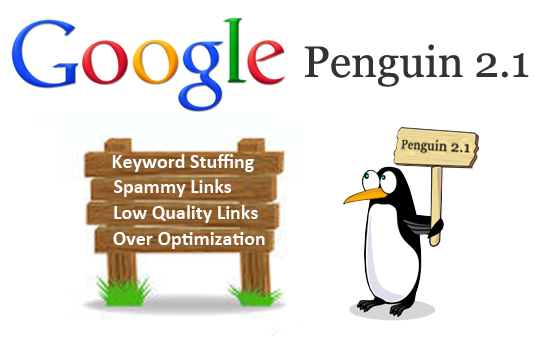
    In late 2013 Google released its latest search algorithm update, affectionately called Penguin 2.1. While the update was meant to target spammy sites for downgrades in the overall search ranking results, many legitimate sites also got hit. In order to make sure that your organic search methods comply with the update, and ensure that your online performance marketing goals are met and exceeded, follow these recommendations when creating online content:

    Focus on valuable unique content

    The purpose of Penguin 2.1 was to essentially reduce the search rankings of unhelpful webpages, and increase the search rankings of pages which tend to offer the searcher relevant and valuable information. One of the best ways to preserve, and even increase, your search engine rankings is to consistently ad new, unique, and high quality content to your website.

    Avoid the very appearance of spammy links
    If you are advertising your website with spammy forum comments, blogroll spam, or even blog comments signature spam, your site may suffer wrath of Penguin 2.1 or future updates. Immediately analyze your links critically, and remove any unnatural links which may trigger a downgrade in your positioning.

    Challenge Google at your own peril

    As can be seen here in a story related to popular website rap genius, trying to manipulate Google’s search algorithms can be a dangerous exercise. If you are looking to try to exploit Google’s search methodology for your own benefit, be warned: you may get slapped. Instead of going head to head with Google, especially in a blatant and public manner, it is far better to focus on producing the kind of content which will cause your web pages to rank well organically.

    The Bottom Line

    Trying to master Google rankings is tantamount to trying to hit a moving target. But, considering the internet itself is little more than a massive collection of content, those who focused on producing the best content will generally have the fewest worries. This is because it is the job of search engines to continue to seek better ways to deliver their customers with the most relevant search results. The more you focus on offering your product or service in a way which is genuinely helpful to your site’s end user, the more likely you are to consistently rank well and avoid falling victim to future search engine algorithm updates.

  • Market To Previous Customers Or Pay The Price

    Market To Previous Customers Or Pay The Price

    Previous customers are may be the most overlooked and undervalued of all lead sources. This much can easily be proven simply by reviewing the number of companies offering customer acquisition versus the number which offer customer retention and relationship development. But placing your primary marketing focus on acquiring new customers is nothing more than a way to spend more money and effort accomplishing something that should cost far less and be far easier. Savvy marketers look to deepen their relationships with previous and existing customers, and reap benefits that would make other marketers jealous.

    Previous Customers are taken for Granted

    Suppose you are marketing an informational e-book. Do you suppose that the bulk of your marketing budget should go towards seeking new customers, or marketing to those who have already purchased from you in the past? Many marketers would do little more than send the previous customers a set of canned email solicitations, announcing the new product. This is a practically free method of marketing which treats previous customers almost as an afterthought. Meanwhile, much of the marketing budget will be dedicated to PPC, Facebook, display ads, and other means of marketing which primarily target new customers.

    Missed Opportunity

    The above example represents and enormous error, and missed opportunity. According to a study by Bain & Capital, acquiring a new customer is six or seven times more expensive than selling to a previous customer. This means, all things being equal, your investment can do up to seven times the work if directed at pervious customers as opposed to new customers. Of course, this advice pertains more to those who already have a sizeable database of existing and previous customers. New marketers have little choice but to build up a list of satisfied customers, and can steadily allocate more of their marketing budgets to previous customers as they go.

    Focus First on Customer Experience

    Offering superior service is essential in laying the foundation for sales down the road. A recent study found that 62 percent of customers across the globe switched from one company to a competitor due to poor customer service. If you do not offer outstanding service your company will be in that 62 percent. Online performance marketers can use the checkout process to further help ensure that first time customers will return. For example, the customers could be offered the opportunity to check a box and be among the first to be notified about new products or services before the general public, or even offered a “no expiration” discount coupon as a gift for making their first purchase.

    Believe in Your Offering

    Many marketers fail to adequately target previous customers because they, the marketers, do not truly appreciate the product or service they are offering. Imagine a Lamborghini salesman. He or she would certainly contact a definite list of previous customers every time a new model is announced because he knows that his customers truly value his offering. He does not hesitate to make the call, and in fact sees himself as doing the previous customers a favor by allowing them to place an order before everyone else. High end sports car sales may seem like an extreme example, but it really is appropriate. You must be every bit as convinced of the quality and utility of your product or service as a high end sports car salesperson is about his. If you aren’t, you won’t market to previous customers because you will have considered yourself lucky that they bought from you in the first place.

  • Performance Marketing And The Law Of Large Numbers

    Performance Marketing And The Law Of Large Numbers

    The Law of Large Numbers says that only over a sufficiently large number of occurrences, or trials, can the result of the trials become apparent. As applied to performance marketing, the law’s application says that only after running a large number of trials can a campaign’s effectiveness be determined. For the same reason you would never determine the probability of flipping heads or tails after a trial of just 10 flips, you cannot judge your campaign’s effectiveness after just a few trials.

    The first active part of performance marketing occurs with the deployment of advertising trials. It is the moment that the ad goes live, and customers begin seeing the ad, that things get interesting. In internet marketing every ad is going to have its own unique desired click through rate (CRT), and actual CTR. But it is important that a sufficient number of impressions be allowed to run before determining that a particular ad is a success or a failure.

    One of the most important questions many performance marketers ask is just how many trials within a campaign are sufficient to determine whether or not the campaign itself is a winner. The answer to this question will ultimately depend on many factors including the kind of product, the cost of the product, the lead source, and how much money the marketer has to fund the campaign. In general the marketer should devote a predetermined part of their marketing budget to each trial, a sum sufficient to place their ad before a large number of prospects. The trial should be allowed to run to its completion, and should not be aborted early due to poor results.

    Many performance marketers rebel against this law. Often after having read the reports of a “super marketer” who has a golden touch, they decide that following his lead should result in instant success. But the sobering truth is that the entirety of performance marketing is based on the application of this law. Ignore it to your peril.

  • Master The Message – Positioning Can Make Or Break A Campaign

    Master The Message – Positioning Can Make Or Break A Campaign

    One underutilized idea in the world of performance marketing is positioning. Positioning is not just the product or service you market, but it is the way in which you present your product or service to your customers. Some good examples of positioning include a national soda brand which uses bikini clad models to sell their products, or an international technology company which presents their product as being refined and exclusive. These examples of positioning give an important clue as to how to best market a product: Using the old adage of selling the steak and the sizzle we can see that not only should you sell the product –the steak, and the presentation – the sizzle, but also the idea that eating the steak confers tangible benefits to the buyer’s health or social status. That is positioning.

    There are many aspects to properly positioning your product or service. Some of the most important include:

    • Imagery – People usually think in pictures. When a person thinks about the good life they see mental images which they associate with positive progress. Perhaps they see money, or see themselves in a new car or home. For years advertisers have made use of the fact that young men like to imagine themselves surrounded by beautiful women. One of the best positioning strategies is to get in touch with your potential client’s idea of the good life, or life without a certain problem the currently have, and then present that image to them in your ads.
    • Scarcity – Positioning your product or service as being scarce is almost always a good idea. For example, a current internet trend is not only to offer a traditional email sign-up for an auto responder series, but to inform the prospect that the “program” is currently closed and that they will be placed on a waiting list. So, instead of automatically getting the information they were looking for, the prospect will be sent an email saying that they will be notified when the program is reopened. This artificial scarcity is thought to increase a prospect’s desire for the product, service, or information.
    • Exclusivity – People love it when a product or service gives them a sense of superiority. This is why exclusivity is such a powerful selling position. Products and services which are positioned as being exclusive work well when simultaneously positioned as being scarce. This increases the sense of superiority or exclusivity for those who are ultimately able to obtain it. Offerings which convey a feeling of exclusivity to the customer can often be sold at a premium, and can command intense customer loyalty when properly positioned.

    The goal of positioning your product is to cause your potential customer to intensely desire it. As convincing a person to make a purchase, or take any other action, is largely based on your ability to connect your product to the prospect on an emotional level, the more intensely your prospect visualizes him or herself with your product, the better. This is why so many performance marketers fail. They fail to make the connection between their product or service and their prospect’s core emotional needs. But by using these three positioning techniques, the performance marketer can significantly increase the odds that their prospect will connect emotionally with their offering.