Category: Sales

  • Build A Steady Income With Recurring Billing

    Build A Steady Income With Recurring Billing

    One of the easiest and best ways to cash in on all the hard work it takes to make a sale is to base your sales model on recurring billing. The two types of products and services which are easily billed on a recurring basis are those which generate automatic sales (renewals and reorders) and automatic income (residuals.) These two recurring billing models are really two different ways to achieve the same goal, but they will be treated separately here. Additionally, these two areas are not always to cut and dry, and there is bound to be some overlap in certain products and offerings.

    Reorders and Renewals

    Reorders and renewals refer to products which can be automatically delivered as the customer is automatically charged. Examples of these kinds of products would an automatic shipment of vitamins with automatic billing, or a magazine subscription with monthly billing. When there is a physical object being delivered, it is easier to think of the process as “reordering,” though the customer may not have had to actually place a new order. Renewals would refer to a monthly subscription such as a membership to a website. The period of renewal or reorder may be monthly or even yearly, depending on the product and the offer.

    Residuals

    Residual income refers to doing something once and receiving income from that action well into the future. Artists, such as musicians and movie stars, are often paid for years when their music or movies are purchased down the line. So, in this case, it is possible that very little work goes into earning the residual, as sometimes residuals are earned for decades with absolutely no additional work by the producer. One good thing about residuals is that they can often be sold or transferred.

    The Benefits of Recurring Income

    The top reason affiliate marketers should get into products which give recurring income is that this sales model helps the marketer earn more over the lifetime of a product than selling it on a “one-time” payment model. For example, if you sold razors to men with the one-time model, your customer may purchase 10 razors now, but then buy from a competitor next time. But with the recurring model he would automatically purchase 10 razors per month from you, and even come to depend on and expect their delivery.
  • A Quick Guide To The Sales Funnel – For Affiliate Marketers

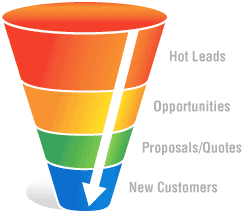
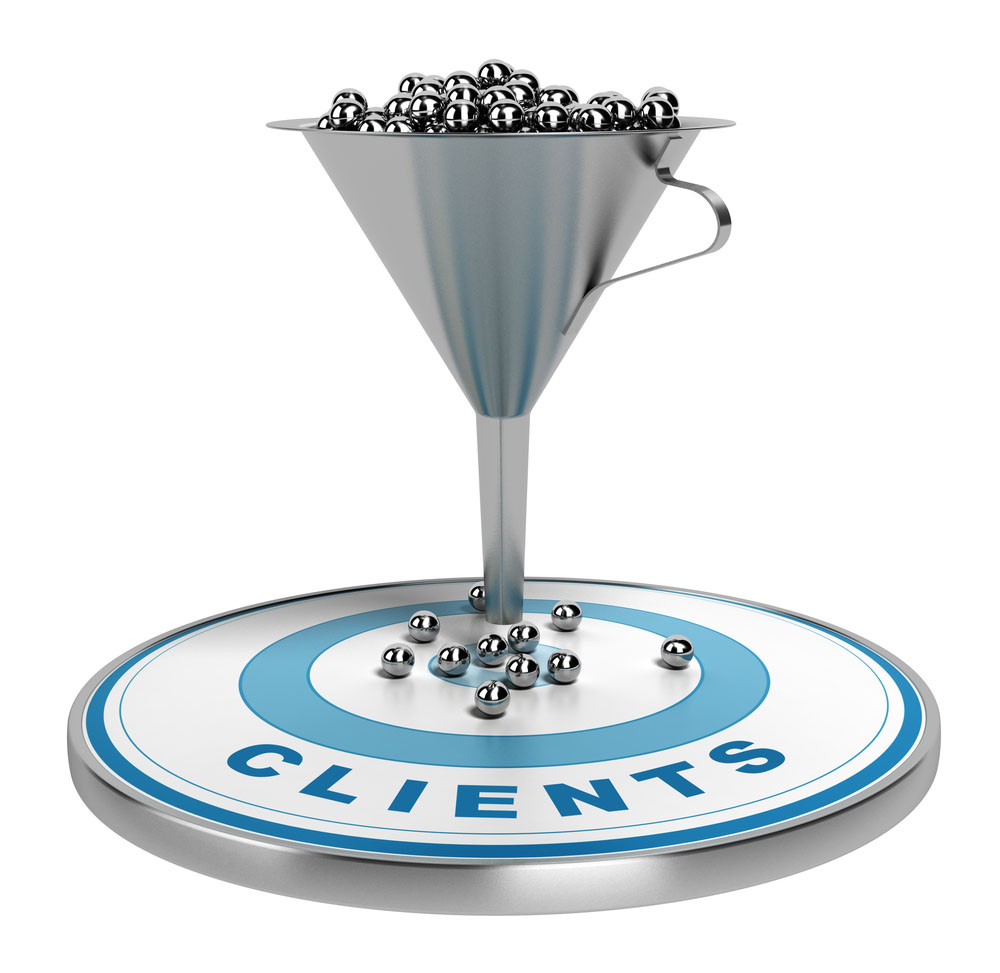
    sales-funnelA sales funnel is a process which can represent your entire sales process in one image. As a funnel is wide at the top and narrow at the bottom, so your sales funnel is meant to call the attention of a wide swath of potential clients in the beginning, and continue to whittle that group down until you reach those who will become paying clients. There are a lot of individual theories related to the sales funnel concept, and there are even tools to help you track your funnel. Here we will take a look at some basics of the sales funnel for an affiliate marketer.

    1. The first step in the sales funnel is broadcasting your marketing message to as many prospects as possible. This does not mean broadcasting to as many people as possible, as all people are not potential customers. For example, if you are advertising to seniors who may want a new walk-in bathtub, you would broadcast your message on seniors’ webpages, in AARP magazine, etc. For affiliate marketers, people usually enter the sales funnel when they enter their information on a landing page, or call in for more information about a product or service.
    2. The second step in the sales funnel will generally differ from business to business, and product to product, but usually includes some kind of customer contact. Here is it important to note that all the steps in the sales funnel are call and response. Now that the customer has given you their information or called your company (step 1), you may respond by replying with an auto responder series, sending them a newsletter, or giving them a free trial. In other words, step 2 is all about responding to the customer’s request for more information.
    3. The third step involves handling the customer’s response to step 2. Depending on the length of the sales funnel this may be the point where the actual sale is made. Other sales funnels will be longer, and may include the customer watching a video, then taking a webinar, then talking to a coach to ask any questions they have, and then finally making the purchase. So, step three and those after really just represent a series of steps the customer will take up to the point of making a purchase. Sometimes the sales funnel will even have a small purchase in earlier steps, leading to a larger purchase in later steps.

    As can be seen, the sales funnel can be as short as 2 steps, or as many steps as the affiliate feels is necessary to convince the prospect that the offer is worth purchasing. In 2013 there were some marketers who disputed the practicality of the sales funnel altogether, saying that prospects are not so readily predictable as to follow the well laid out steps. Considering that a sales funnel is meant to do 2 things: generate sales, and accurately track conversion rates of each step in the process, it is true that any disruption in either of these two metrics could cause the sales funnel concept to falter, but not necessarily fall apart. These would simply be signs that additional tracking metrics are needed, or that some steps of the process need to be improved or eliminated.

  • Affiliates: Insulate Your Sales Funnel Against This Hidden Foe

    Affiliates: Insulate Your Sales Funnel Against This Hidden Foe

    In the world of affiliate marketing the name of the game is sales. If an affiliate brings sales to the company that likely would not have happened without their involvement, then on a whole this is seen to be a net positive for the company. Of course there are other considerations, such as marketing and promotion techniques and conversion rates – but overall more sales are better. But determining which sales your company would have otherwise made, without the affiliate, is very important and can lead to some interesting conclusions.

    As can be read in this article, sometimes affiliate marketers simply send customers to purchase a product that they were going to purchase anyways, collecting a commission in the process. In extreme cases, customers actually stop the buying process, and then go through an affiliate link to continue it. Here is how it happens:

    1. Customer arrives to your website through your blog, PPC, or some other non-affiliate manner.
    2. Customer finds a product or service on your site, adds it to their cart, and proceeds to the check out.
    3. On the checkout page the customer sees the “Add Discount Code” field and instead of continuing the purchase without a discount code, decides to open another browser and search for one.
    4. When the customer searches “[Your company name] discount code” the top results take them to your affiliate’s websites, where the customer is presented a discount code, which may or may not be valid.
    5. The affiliate site puts a cookie in your customer’s computer, and redirects them back to your site, where they finish the purchase.
    6. Affiliate collects commission for the sale.

    This whole process may happen by accident or on purpose. The big take away here is that retailers should take note and make necessary changes to prevent this from happening.

    To read more from VentureBeat.com, click here.

  • Live Chat – A Must Have For Any Sales Team

    Live Chat – A Must Have For Any Sales Team

    In the old days an 800 number was absolutely essential for any nationwide sales team. The consumer came to rely on the toll-free number as a way to reach out to a company to ask question or place an order, while avoiding high long distance charges. Now, a new kind of communications platform is rising in popularity. The live chat, like the toll free number, is helping increase customer contact options. But the live chat option has a few advantages over a phone call.

    Here are some reasons every company should have a live chat operation:

    • People at work may not be able to talk on the phone, but they can often use their computers to live chat. This will allow them to contact your company when they have the initial impulse to do so, instead of having to wait until later.
    • Live chat provides a transcript of the conversation which can be saved by your company and the customer. This can reduce the customer’s need to call in again to request the same information. Also, it ensures your company will capture the potential client’s vital information such as name, email, and phone number.
    • Live chat operators can be offshore, and therefore costs less. Unlike phone operators which may have a distinct accent, offshore live chat operators suffer no disadvantage as compared to American workers doing the same job.
    • Offering a continually staffed live chat service on your website shows that your company is professional and responsive.

    To read more from Kiss Metrics, click here.

  • Improve Sales by Winning Your Customers’ Loyalty

    Improve Sales by Winning Your Customers’ Loyalty

    The concept behind loyalty programs is simple: Offer customers special benefits, rewards, and discounts for their continued patronage, and customers will reward your business with their loyalty. It is a fact that operating a loyalty program is a good idea for many different kinds of businesses. It is also a fact that many businesses get it wrong. In fact, every business should consider its marketing to attract new customers, and its continued marketing after the sale, to be their loyalty program – whether or not a card or membership number is involved. Here we will take a look at ways to improve your customer’s loyalty to your business. 

    Personalize the Presentation

    The key to winning your customer’s loyalty is personalized interaction between the customer and your business. After all, you are asking for them to choose you over the competition, though you may not have the lowest prices or largest selection of products or services. But your customer will choose you more often if you treat them as an individual. Ask their names, and then call them by their names for the duration of the encounter. Smile. Tell the customer that you appreciate their business. Ask them to come back soon. For sales over the internet, you can use their first name in all email correspondence, and even have a representative call customers who have made large or recurring orders. These seemingly trivial gestures will cause your customers to want to engage more with you and your business. In fact, these are the beginning steps to tuning a business into a brand. 

    Engagement is the Key

    According to a recent Gallup survey, which gauged people’s level of loyalty to various kinds of companies, businesses which more thoroughly engaged their customer base benefited from up to twice the rate of loyalty than less engaging businesses. This engagement covers everything from soliciting customer feedback to actually implementing popular and reasonable suggestions. Not only does customer engagement lead to higher loyalty to a particular business or brand, but it also correlates well with your customer’s overall satisfaction your company’s customer service. Engaged customers simply appreciate your product more than un-engaged customers.

    Respect the Emotional Nature of Making a Purchase

    One of the reasons the U.S. economy is based 70 percent on consumer spending is because Americans love to shop. Shopping is often an emotional experience. This point really follows the others, and completes the picture: Engage your customers’ emotions; help them have the times of their lives when purchasing your product. Many times people will decline to make a purchase because they think they will regret it later, or they don’t trust the company’s presentation. One way to win your customers’ loyalty is to acknowledge these emotions and help your customer through them. Help them see all the benefits of your product or service, but remember that they buy the feeling that having your product will give them.  Review your sales process. Is it fun? Is it comforting and reassuring? Is it alluring? If your sales processes and materials do not evoke strong positive emotions it will be very difficult to win your customers’ loyalty.

  • Getting The Most Out Of Your Company’s Sales Leads

    Getting The Most Out Of Your Company’s Sales Leads

    Salespeople all across the country believe that the leads they are provided by their employers play a major role in their sales success. It’s a running conversation in every sale’s office. Everyone wants the new lead, the fresh lead, and the hot lead. Nobody wants to old, tried, stale, never-could-get-them-on-the-phone lead. All too often disillusioned salesmen and women find that the new leads are the same as the old leads. Frequently it’s the lead source that is the issue. Other times it’s the way in which the leads were generated which causes the problem. No matter the issue, there are ways every company can ensure that everyone gets the best out of the available leads. Let’s take a look at some of the ways to ensure that your salespeople are getting the most out of their leads.

    Know Your Customer Inside and Out

    A running theme on this blog is that business owners simply must know who their customer is. They should know the age range of their customer base, whether they watch football or tennis, whether they drink beer, wine, or neither. Every lead which was generated in an honest fashion and contains valid information about a prospect in the demographic of your client base is a good lead. In order to judge your lead provider you have to know as much as possible about the client base which you expect your lead provider to deliver to you.

    Spare no Effort to Contact Your Leads

    Though it may be seen as going overboard, many a sales manager has demanded that their sales people call current leads up to six times per day in order to qualify to receive new leads. Of course no one wants to harass the prospect. And the nature of the business will help to determine the rules of contact. For example, debt relief leads require more calls because people being harassed by creditors are less likely to answer the first few calls. More delicate leads may require fewer calls. Overall, salespeople should make every reasonable effort to contact current leads before giving up on them and going on to the next. This includes using voice mail, email, and even traditional mail when appropriate.

    Ban Lead Bashing and Use the Poker Player Analogy

    So much of sales is morale. Too often when a salesperson is in a funk they begin to look for anything which they can blame for their lack of success. Leads often take the brunt of the blame. There are thousands of capable salespeople who have convinced themselves that sales success is “luck of the draw,” with those who do the best simply being lucky enough to draw the better leads. It is a good idea to outright ban lead bashing among salespeople, while remaining open to honest feedback and dialogue about the leads, feedback which can lead to better targeting. One helpful analogy for those who think sales amounts to getting lucky with the leads is to ask them if they think the average person can beat a world champion poker player in a game of poker. After all, the cards dealt in poker amount to luck. If they agree that top poker players have skill, then they should be able to see that it’s what you do with your leads determines your success or failure.