Category: HTM Blog

  • Why Performance Marketing is Just Like Professional Sports

    With the Super Bowl just finished, the National Hockey League continuing for the next few months into the Stanley Cup Playoffs, and Major League Baseball Spring Training starting up, most people will be settling in to see their favorite sports teams win (or lose) their respective games. But what about their businesses? For any business, Q1 can be an important time. It is the time of year that business owners and managers set budgets, present yearly goals, and set the tone for the rest of the year, just like any sports team’s conditioning sets them up for the season. In many ways, performance marketing and professional sports are very similar, both in methods and goals.

    Offensive and Defensive Strategies are Used to See Results

    Both sports and businesses using performance marketing want to see one thing: results. Every sport has offensive strategies and defensive strategies, used in conjunction with each other to create a balanced strategy that results in more wins than losses. Businesses in the performance marketing space do the same. Performance marketing is a form of interactive advertising that is used to generate results. The performance marketing space is more than just affiliate networks. In sports, using only an offensive or only a defensive strategy often times will not result in a win. The same can be said for performance marketing. Exploring your options and having a broad and balanced strategy can be beneficial for results.

    Analysis is an Important Part of a Good Game Plan

    Sports are not just about performance. Sports require preparedness and studying. Any good coach will tell you that they review their competitor’s games/tapes in order to evaluate what they are up against and to discover any tweaks that may need to be implemented in their game plan before the big day. The same goes for businesses. If your performance marketing strategy is not getting you the results you want but your competitor’s strategy is flourishing with success, evaluate what differences exist and what you can do to compete with them in the future. After your analysis, make the necessary changes if possible.

    Each Take a Commitment to Hard Work

    “You need three things to win: discipline, hard work and, before everything maybe, commitment. No one will make it without those three. Sport teaches you that.” Haile Gebrselassie, two-time Olympic Gold Medalist. Any professional athlete or coach will tell you that commitment and hard work are import if you want to see results. For performance marketing, results will require hard work and time. Expectations should follow a form of thinking that adopts dedication, especially in order to see progress throughout the year.

    While sports and performance marketing may seem quite different, there are strong similarities between the requirements needed for success. Each requires a broad and balanced strategy, a commitment and dedication to hard work, and the ability to adapt and adopt changes in their game plan.

  • Keeping Algorithm Changes in Mind When Advertising

    In the fall of last year, Google rolled out several algorithmic updates including Panda 4.1 (September 23rd), Penguin 3.0 (October 17th), and Pirate 2.0 (October 21st). As many know, these changes can drastically affect search engine rankings and website traffic. If you are following Google’s guidelines, it is likely probable that your traffic can increase. However, in cases where you are not adhering to Google’s guidelines, you could potentially cause major harm to your business. This is why it is important to keep Google’s algorithmic changes in mind when considering your advertising options.

    Put Google on Your Radar

    Paying attention to the threats Google makes about what it will penalize can give you some direction when advertising. No more guest blog posts. Pages with too many ads will be penalized. Using Transport Layer Security (TLS aka HTTPS) will result in better rankings. Mobile friendly sites will be highlighted in mobile search. Et cetera, et cetera. Google’s list of threats goes on and on and on. While some of these threats have yet to come through, there have been blips of changes regarding others. You can use these changes to determine what your advertising focus should be. For example, Google’s November 2014 announcement to label “mobile-friendly” sites as such makes it clear that mobile is important. Therefore, mobile advertising campaigns would likely be beneficial for business.

    Adopt a Variety of Advertising Mediums

    In 2009, Google released a lesser known algorithm known as Vince. The Vince algorithm put emphasis on brand validation and factored trust into rankings. The impact of Vince was that marketers and   advertisers had to adopt multi-faceted campaigns in order to build trust. This required more time, more content, and engagement of the online community. More often than not, the goal of an advertisement is to encourage someone to take action or to reach an audience. Using a variety of mediums with specific advertising campaigns can help you achieve these goals, as well as your authority, especially in Google’s eyes.

    Accept Changes Early Rather Than Later

    It is vital for businesses nowadays to have a knowledgeable staff capable of understanding the implications and having the ability of adapting to Google algorithmic changes. Take for example, the October 2014 announcement of Google’s new app called “Inbox”. Understanding the features of Inbox app and how it will affect email advertising is important. Google has made it clear that Inbox app will “bundle” particular types of messages together for better user experience. Taking this into account, it could prove beneficial to evaluate how email advertisements fit into your campaign.

    While nothing is known for sure, it is clear that Google’s algorithms can drastically affect business and advertising. Taking the time to pay attention to Google, adopting various advertising opportunities, and accepting certain changes early can be a huge influence in the success of your business.

  • Lead Generation To-Dos in the New Year

    Performance marketing has taken over the marketing world. It is rare that you would find a business that does not utilize some form of performance marketing. Lead generation is one of these useful performance marketing tactics. Lead generation is the formation of consumer interest about the products and services of a particular business. Lead generation can then be used in a multitude of ways depending on your marketing motivations. Creating lists for emails or online magazines, generating a compilation of potential sales leads, or building a rewards/loyalty program are just some of the ways lead generation can be used. The following is a list of important to-dos to keep in the back of your mind for the New Year.

    Genuineness and Transparency

    Customers want two things from businesses. 1.) To know exactly how the business operates and what type of service they should expect. And 2.) for marketing to feel genuine. No one likes shady business and marketing tactics. When businesses are transparent, they are extending an arm of trust to the consumer. Customers would rather have a genuine interaction with marketers and ads, and have the ability to get information or quick answers. Being transparent and genuine is vital for lead generation for creating consumer interest.

    Efficiency and Communication

    When you have inbound leads it is important to respond and connect with them quickly. Today’s world moves at a quick pace. It is no longer acceptable to try your hardest or be as quick as you can. Customers expect efficiency, and when businesses don’t deliver the end result could be a poor recommendation or a negative online review on Glassdoor. Communicating with the customer efficiently is something that should be practiced by every business, especially in the lead generation industry.

    Content and Engagement

    Content is still king. It has been shown time and time again that people want information. Basic and pamphlet type sites will not generate consumer interest. By providing quality content for potential customers, businesses are engaging with their audience. Social media has proven that people expect businesses and brands to engage with them (just look at the increasing popularity of AMAs). Content and engagement can be very beneficial for lead generation.

    Lead generation is not going away. Not yet. Lead generation can be a powerful tool for your business if done correctly. Make sure you aren’t depriving your marketing strategy of potential successes and keep up on new strategies and tactics in the coming year.

  • Important Things for Performance Marketing in 2015

    Performance marketing and affiliate marketing has been a rapidly growing in the past several years, making the use of search engine marketing more important than ever. Content and social media are great mediums that must be used in the coming year, and it is more important than ever to have a mobile optimized and efficient site.

    Distribution of Content:

    Having great and plentiful content is one thing, but consumers need to see it. Furthermore, the right people need to see your content. Content is meant to provide value. If your content is not being distributed or seen by the appropriate audience, it will do you no good. Any good marketing campaigns should address this. Most pay per call marketers can help businesses distribute their content.

    Social Media:

    Social media has been taking over the web and is changing how businesses operate. Not only does a social medium impact your search results, but social media can influence recommendations, and you now have the opportunity to promote your business through Facebook and StumbleUpon Advertising or Promoted Tweets on Twitter. Social shares and influence relate to social signals, which are slowly appearing as ranking factors.

    Mobile Marketing:

    The mobile phone industry has been booming. Just look at Apple’s iPhone 6 sales. This is indicative of what consumers use to access business information and contacts. Your marketing campaign should include mobile optimized plans in order for potential customers to contact you by phone. Ease of access can translate into quick wins, while difficult user experiences can lead to negative reviews and high bounce rates (where users spend short periods of time spent on your website and leave almost immediately).

    Efficiency:

    Do you have a 404’d page on your site? Does your site take more than a few seconds to load? It is absolutely vital to make sure your website functions correctly and helps to provide a smooth user experience. Checking your website speeds and updating your software regularly is a great practice. Metrics such as unique vs. repeat visitors, bounce rates, and landing page conversions can help you to determine what might need fixing on your site.

    2015 is here.  Now is the time to make sure your marketing campaign and online strategy is enhanced to ensure your business has the best year yet.

  • Reasons to Attend an Affiliate or Performance Marketing Conference

    In any industry, interaction and participation are keys to success. Without some method of interaction, becoming knowledgeable of industry changes, meeting people, and growing your business would be difficult. This is why people go to conferences. Conferences have solutions. The following list includes some of the best reasons to attend an affiliate conference.

    Gurus and Technology

    Conferences are places where all of the experts come together in one location. Many gurus give seminars on internet marketing and other aspects that can include best practices or new methods of success. Often times, these experts will stay after their presentations to meet with guests and answer additional questions. Furthermore, experts on new technologies are available, giving you more access to tools that could help your business operate more effectively.

    Other Affiliates and Performance Marketers plus Vendors

    It is highly probable that you will run into other affiliates and marketers at these conferences. These opportunities are perfect for meeting affiliates in your region or area, and connecting with any local groups that could help you gain and master internet marketing skills. Additionally, there will be plenty of vendor contacts and instances in which to compare tools.

    Information

    This is one of the most important benefits you gain going to an affiliate conference. With everything going on, the most relevant information for internet marketers will be available to you.  Any and all information is useful to everybody, from beginning performance marketers to seasoned marketers.

    A Great Time

    Who says you can’t work and play at the same time. Between the giveaways, prizes, and parties, affiliate and performance marketing conferences are a blast. The social nature of conferences create atmospheres perfect for meeting new friends and building quality, professional relationships.

    It is important for all affiliate and performance marketers to reap the benefits of a conference at least once. These conferences provide you with the knowledge and means to have a flourishing internet marketing business. Below is a list of several of the affiliate marketing conferences happening in 2015.

    -Affiliate Summit West in Las Vegas, January 18-20

    -ICOM 2015, February 17-18, Colombo, Sri Lanka

    -IEG 2015, March 15-18, Chicago, Illinois, U.S.

    -DIGIMARCON WEST, March 19-20, Vail, Colorado, U.S.

    -World Social Marketing Conference, April 19-21, Sydney, Australia

    -Social Media Marketing World, March 25-27, San Diego, California, U.S.

    -INBOUND, September 8-11, Boston, Massachusetts, U.S.

    -AMA’s Annual Marketing Conference, September 9-11, New Orleans, Louisiana, U.S.

  • How Pay Per Call Performance Marketing Really Works

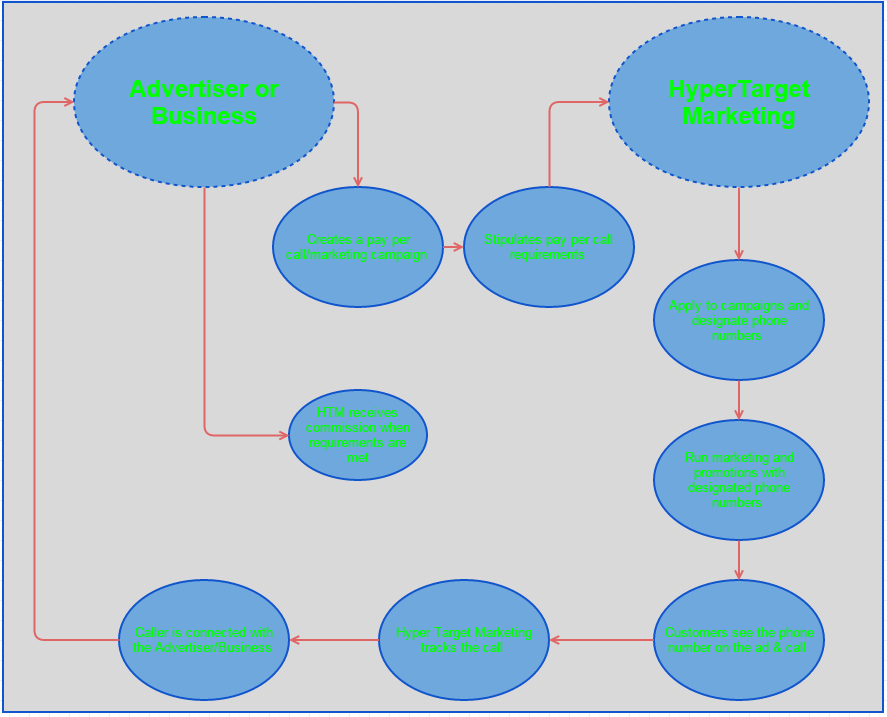
    Pay per call performance marketing is a relatively new advertising strategy. While many people know what pay per click advertising is and how it works, few truly understand the concept of pay per call. The importance of pay per call marketing has steadily been increasing amidst the growing relevance of the mobile phone to our society. More consumers than ever have data driven mobile devices, which makes pay per call a worthwhile avenue for business success. So, how does pay per call performance marketing actually work? Take a look at the following chart:

    marketing

    First, an advertiser or business decides to run a marketing campaign. The advertiser/business then creates a pay per call campaign and determines what the pay per call requirements are with the publisher. The publisher then applies the client’s designated phone number to specific marketing campaigns. Potential prospects for the client search for the services the advertiser provides. Prospects see the publisher’s ad and call the designated phone number. The publisher tracks the call and the phone call is forwarded to the client (aka: the advertiser or business). The client then pays the publisher for all qualified phone calls. The pay per call process is meaningful information for marketers and business individuals to know. Pay per call can be yet another tool in an advertising arsenal.

  • Meet the HTM team at Affiliate Summit West

    The pay per call team from HyperTarget Marketing will be attending Affiliate Summit West in Las Vegas, January 18-20.  If you are planning to attend, get in touch today to schedule a meeting!

  • The Good and Bad of Pay Per Call Performance Marketing

    The Good and Bad of Pay Per Call Performance Marketing

    Performance marketing for most people is a somewhat confusing term. In terms of the advertising world, it is arguably the most misunderstood marketing concept that there is. Part of that may stem from the fact that it has only been in existence for a little over a decade and even the most senior executives don’t always have a completely accurate understanding of what exactly it is. It is primarily for this reason that performance marketing, and especially pay per call performance marketing, has not reached its full potential as an advertising medium. If the perception were to improve, or at least be clarified to some degree, it might get the respect it deserves.

    An Easy Definition

    Perhaps the easiest way to define performance marketing is to say that it is essentially paying outside representatives to advertise your business. For example, if Nike hires individuals who do not work directly for the company to advertise its products and draw customers to make a purchase, then Nike has just engaged in performance marketing. Likewise, pay per call performance marketing is a system in which a business pays an outsourced marketing company to generate calls by interested potential customers. While it this form of marketing is still an emerging advertising method, there are benefits and drawbacks to it that many have already defined. So what exactly are some of the things that people in the know consider advantageous about performance marketing? There are things about it that can have a tremendously positive impact on a company’s marketing ROI.

    Huge Market with Big Upside

    First of all, performance marketing is a $25 billion industry and is growing steadily every year – with pay per call growing rapidly as well. Almost 70 percent of ad-related transactions that take place on the internet are paid for on performance. Some of the most recognizable brands such as Walmart, Target, and H&R Block use performance marketing. One of the reasons companies are willing to pay the millions of dollars that they do to utilize performance marketers is because it is completely centered around ROI and the results are entirely measurable. There are multiple channels through which performance marketing can be tested such as search, email, social networks, and others which speaks to its versatility. And most performance marketers are able to start their businesses for an initial investment of $10,000 or less. Of course, for many sales organizations the most important thing is to have the phone ring with a qualified customer on the other end. There may be no better way to make this happen than outsourcing the job to a performance marketing firm.

    The Downside

    On the other hand, there is considerable downside to this medium as well. One of the most glaring objections that marketers have is the rampant fraud that is able to be perpetrated with both sales campaigns themselves as well as with lead generation. Since the bulk of performance marketing is done online, it is easy for fraudsters to commit their crimes and hide their tracks in doing so. Also, federal regulations in the United States as well as in other countries are implementing privacy laws that make it increasingly difficult for marketers to utilize some of the tactics necessary to market their wares. And possibly one of the worst drawbacks is that legitimate marketers can be held liable for the actions of fraudsters who commit internet crimes in their name.

    Though these situations can be difficult on the side of the marketer and client, they also serve to weed out the good companies from the bad. Overall, reputable pay per call performance marketing firms are judged by the quality of the leads they deliver, making this performance marketing niche less prone to fraud and some of the other abuses seen in other performance marketing niches.

  • Maximize Your Marketing Efforts

    Maximize Your Marketing Efforts

    Marketing is a funny animal, especially when it is in the form of content marketing. It is certainly not the most difficult concept in the world by any stretch of the imagination and yet it is not such an exact science that business gurus are mastering it the way they would master something like the art of selling or ad copy. There is a significant amount of trial and error when it comes to content marketing and often times it can be the errors that help us the most.

    Content marketing is something that works a little bit differently for everyone. But the end game for any content marketer, however, is to maximize your marketing efforts in order to increase brand awareness, website visits, and ultimately click-throughs and sales and there are steps you can take to do that.

    Develop a Strategy

    In order to realistically expect any success from your content marketing efforts you need to specify what it is you will be doing and how you’re going to do it. Too many marketers take a random or “shotgun” approach in which they put out a bunch of blog posts, tweets, and email blasts thinking they’ve done their job in generating brand awareness. But while this may generate some results, it will not maximize you efforts. There are specific things you need to understand about your target audience or demographic such as what they care about, what compels them to make a purchase, and what the “buyer journey” looks like for them. When you are able to gather as much information about your audience as possible you can better tailor your content to them and establish a regimented schedule for doling it out to them.

    Use Concrete Information Rather Than Speculation To Make Decisions

    Content marketers tend to be more right-brained than left-brained which is to say they are more creative than analytical. This tendency can often lead them to make speculative decisions about the whats, hows, and whens of their content marketing efforts. They go with their gut more often than using metrics in order to strategize their marketing plan which can end up working against them in the long run (and in the short run if they’re really not careful). Analyzing what has worked well in the past versus what hasn’t and building future campaigns and strategies based on that information may require a little more effort than guessing but it is always worth it as it is a surefire way to see the results you want.

    Learn by Doing

    There is something to be said for having a thoroughly thought-out plan and creating a solid content marketing strategy but without actual execution, none of that other stuff really amounts to much beyond wasted time and effort. There is something called “analysis paralysis” which is essentially getting so caught up in the data that you drown yourself in it trying to come up with the perfect content marketing strategy. Strategy is important as we noted earlier but so is temperance. It is important to strike a balance so that you are not over-planning and under-executing.