
Tag: online content

  • How Long Should My Online Content Be?

    How Long Should My Online Content Be?

    Over the past half-decade the Internet has all but converted the average person into an amateur writer.  Whereas prior to the popular adoption of such Internet based activities as blogging and tweeting, the average person probably did most of his or her online communication in the form of writing emails, now Internet based communication is rivaling all other communication forms in terms of scope and importance.  This crossover has given the performance marketer unparalleled opportunities as it relates to reaching and communicating with potential clients. But, recent research indicates that consumers of online content like to have their Tweets, headlines, and blogs served to them in very specific portions.

    Longer Blogs are Better

    When it comes to blog posting several studies have indicated that longer blog posts are actually preferred to shorter blog posts. In particular, readers tend to prefer blog posts which are in the range of 1600 words for blogs which do not feature many graphics, and 1000 words for blogs which are image laden.  The key, according to researchers, isn’t so much the number of words as it is the number of minutes the average reader takes to reach a blog post.  It turns out that 7 minutes reading time is the sweet spot for blogs.  So while many performance marketers make their bread and butter off shorter blog posts, it is worth investigating how longer blog posts may affect the end result.

    Ideal Length of a Tweet – Under 100 Characters

    One of the most important things to remember for those looking to market products and services over the Internet is that people generally do not like to read long blocks of information.  This may be one of the reasons that Tweets which are shorter than 100 characters get 17% more engagement than longer Tweets.  This is telling, considering the maximum character count on Twitter is 140.  The takeaway is that if you want people to care about what you’re saying and respond to or share your messages, keep it short and sweet.

    Facebook Posts Should be Short

    Similar to Tweets, Facebook posts should also be relatively brief.  In fact, if you would like to achieve 86% higher engagement, limit your Facebook posts to 40 characters or less.  Not only will this increase your engagement, if you’re not already following the practice, but you will also have less competition as only 5% of Facebook posts are currently under the 40 character mark.

    Write Brief Headlines

    What about the all-important headlines?  Researchers have found that the ideal length of a headline is just six words.  This conclusion was reached in part by research which indicated that people generally scan headlines and only pay attention to the first and last three words of a headline.

    Be Open to Experimenting

    Much of performance marketing comes down to testing and using the results of such tests to inform future marketing efforts.  But often times it is just as important to learn from the tests of others as it is to conduct your own.  So while you probably have a preferred way of producing Tweets, writing blogs, and making headlines, it may be worthwhile to try some of these suggestions and see if the effectiveness of your marketing campaigns is incrementally increased as a result.
  • Google Penguin Changed Virtually Everything – But This Key Concept Still Reigns

    Google Penguin Changed Virtually Everything – But This Key Concept Still Reigns

    One of the best and most cost effective ways for online performance marketers to get their message across to potential clients is to ensure that they are easily searchable on Google. But while this goal is easy to execute in principle, it can be nothing short of a Herculean task in practice. Due to continuous, and often devastating, updates in Google’s search algorithm, a site which is on the front page today may be relegated to page seven tomorrow. But if there is one trend which seems solid and bankable, it is that Google likes quality original content.

    Here comes the Penguin

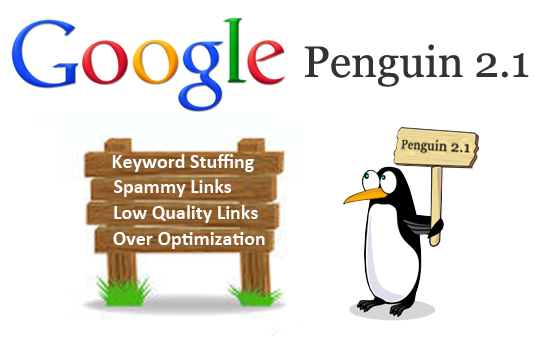
    In late 2013 Google released its latest search algorithm update, affectionately called Penguin 2.1. While the update was meant to target spammy sites for downgrades in the overall search ranking results, many legitimate sites also got hit. In order to make sure that your organic search methods comply with the update, and ensure that your online performance marketing goals are met and exceeded, follow these recommendations when creating online content:

    Focus on valuable unique content

    The purpose of Penguin 2.1 was to essentially reduce the search rankings of unhelpful webpages, and increase the search rankings of pages which tend to offer the searcher relevant and valuable information. One of the best ways to preserve, and even increase, your search engine rankings is to consistently ad new, unique, and high quality content to your website.

    Avoid the very appearance of spammy links
    If you are advertising your website with spammy forum comments, blogroll spam, or even blog comments signature spam, your site may suffer wrath of Penguin 2.1 or future updates. Immediately analyze your links critically, and remove any unnatural links which may trigger a downgrade in your positioning.

    Challenge Google at your own peril

    As can be seen here in a story related to popular website rap genius, trying to manipulate Google’s search algorithms can be a dangerous exercise. If you are looking to try to exploit Google’s search methodology for your own benefit, be warned: you may get slapped. Instead of going head to head with Google, especially in a blatant and public manner, it is far better to focus on producing the kind of content which will cause your web pages to rank well organically.

    The Bottom Line

    Trying to master Google rankings is tantamount to trying to hit a moving target. But, considering the internet itself is little more than a massive collection of content, those who focused on producing the best content will generally have the fewest worries. This is because it is the job of search engines to continue to seek better ways to deliver their customers with the most relevant search results. The more you focus on offering your product or service in a way which is genuinely helpful to your site’s end user, the more likely you are to consistently rank well and avoid falling victim to future search engine algorithm updates.